

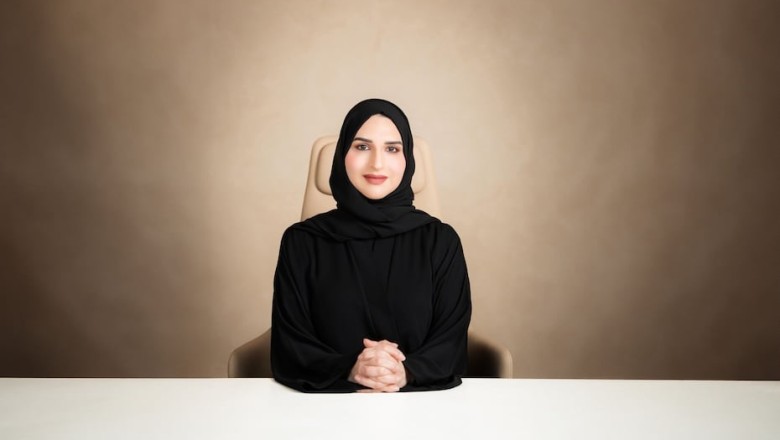

As Dubai nears its 2026 milestone to double the creative sector’s GDP contribution, Hala Badri, DG of Dubai Culture and Arts Authority, is moving the city beyond administrative milestones toward a living, breathing ecosystem
In this exclusive written interview with Gulf Business, Hala Badri, director general of Dubai Culture and Arts Authority (Dubai Culture), discusses the strategic roadmap for the emirate’s flourishing creative sector.
As part of the emirate’s visionary leadership, Dubai is rapidly evolving into a global capital for the creative economy.
With an ambitious target to double the creative industries’ contribution to the city’s GDP to 5 per cent by 2026 and generate 140,000 jobs, the authority is focused on building an integrated ecosystem that supports innovators and entrepreneurs alike.
From the growth of the Al Quoz Creative Zone to community-centric platforms like Hayi, the director general outlines how Dubai is moving beyond standard licensing to create a world-class environment where creativity truly thrives.
When Dubai set the ambition for the creative economy to contribute five per cent to our GDP by 2026, we understood that this vision begins long before a licence is issued or a visa is stamped. It begins with the kind of ecosystem a city chooses to build.
In recent years, the emirate has invested significant energy in shaping that ecosystem. Under the vision of HH Sheikh Mohammed bin Rashid Al Maktoum, Vice President and Prime Minister of the UAE and Ruler of Dubai, and the supervision of HH Sheikha Latifa bint Mohammed bin Rashid Al Maktoum, chairperson of Dubai Culture and Arts Authority, Al Quoz Creative Zone has grown into a district where studios, co-working hubs, production facilities, and cultural venues operate in proximity. This organic growth, supported and steered by Dubai Culture, has created conditions that allow creatives to develop their work with greater clarity and confidence.
Community sits at the heart of this progress. Through initiatives we champion, neighbourhoods are forming around local talent through platforms such as Hayi. The Zone’s achievements, including its growing number of licences, events, and creative opportunities, show how the environment we have helped build continues to attract entrepreneurs, makers, and innovators to the city.
Supporting this physical and social foundation is a framework that nurtures and funds creativity. The Dubai Cultural Grant Programme gives institutions and independent practitioners the means to produce work that adds to the city’s cultural life. Initiatives such as the Entrepreneurship Forum link creatives with investors and partners, helping ideas grow into viable ventures and strengthening the flow of capital into the sector. We also ensure some pathways carry Dubai’s talent outward. Cultural exchange programmes, global showcases, and digital platforms introduce local talent to international audiences and open access to new markets.
Creative businesses also need an environment that supports practical growth. Partnerships with the Commercial Bank of Dubai enable enterprises to open accounts, secure financing, and receive advisory services tailored to their needs. Zoho One allows practitioners to manage their operations in a single place, while Letswork provides studios, podcast rooms, and co-working spaces that suit a wide range of practices.
Finally, to complete this system, we continually invest in talent. Through our partnership with LinkedIn, creatives gain access to learning in design, arts, entrepreneurship, and emerging digital fields. This prepares the next generation of writers, designers, filmmakers, and cultural entrepreneurs to build their careers with confidence.
When we speak about the growth of Dubai’s creative economy, we look beyond the rise in licences. Progress is reflected in the strength of the work being produced here, and that includes ideas that turn into design, writing, film, performance, and research that can be exported into regional and international markets.
Dubai Culture steps in to help practitioners at every stage of their journey. Through grants and talent development programmes, emerging voices have the room to build their skills and develop work with lasting impact. This commitment sits alongside our partnership with the Ministry of Economy, which strengthens the understanding of intellectual property across the sector. With targeted training and practical guidance, creatives learn how to safeguard their work and navigate rights, licensing, and commercial opportunities.
Research also informs this journey. The Creative Dubai report provided the foundation we needed to map the sector’s strengths and identify opportunities for high-value growth. Its insights continue to guide policy and programme design. These efforts are reflected in the city’s global performance. Dubai ranked first among 233 cities for greenfield FDI projects in the cultural and creative industries in 2024, attracting 971 projects and AED 18.86 billion in inflows, a clear sign that the world recognises the quality of work emerging from here.
Our goal now is to help local talent scale. Access to international platforms, exchange programmes, and export-oriented support allows Dubai-based artists to reach new audiences and expand their impact. This is how a licence becomes more than a registration and becomes the beginning of a meaningful creative journey.
Every ambition begins with a moment of reflection, and for Dubai’s design sector, that moment lies in recognising the scale of what is possible. The city already holds a strong position in the region, with design forming the largest share of its creative economy. This foundation gives us confidence. The next chapter is about helping more young people see the field as a path they can pursue here, shaped by local opportunity and informed by global influence.
The most immediate hurdle is perception. Many students still picture their journey starting abroad, influenced by the legacy of older design capitals. Our role is to show that Dubai offers a complete pathway, from education and prototyping to production and market access. Districts such as d3, expanding academic programmes, and active industry partnerships create an environment where a designer can begin and grow their practice within the city.
This is where international partnerships matter. Working with centres such as Milan and London provides mentorship and visibility while enabling young designers to learn from established creative ecosystems. These exchanges expose young talent to new approaches and markets and draw international attention to the work emerging from Dubai. Programmes such as the Talent Atelier illustrate this clearly. Participants gain access to leading practitioners and form networks that support them long after the programme ends. These collaborations also influence visitation. When respected designers, institutions and curators choose to work with Dubai, they reinforce the city’s presence on the global design map.
The Cultural Grant was created to do far more than support individual projects. Its purpose is to open doors. Each grant forms part of a wider journey that involves growth, visibility and new professional horizons. Funding enables creatives to produce work, travel, conduct research, or present on significant platforms, but the true impact emerges in the opportunities that follow.
This becomes clear when we look at the paths recipients take. With Dubai Culture’s backing, an artist showing at the Venice Biennale reaches networks they may never have accessed otherwise. For design practitioners, participation in Maison & Objet in Paris opens doors to peers, buyers and institutions that can shape the next phase of their careers. Our role in enabling teams contributing to Expo Osaka helped them gain exposure to international collaborators and new ways of thinking. Even the young musicians performing with NYO Dubai at Carnegie Hall built a level of artistic discipline and confidence, strengthened by the programmes that brought them there.
The programme offers support that adapts to each project. Some creatives work with curators or educators who help refine their ideas. Others connect with producers, business specialists, or global partners. This kind of mentorship helps practitioners think long-term and understand what is needed to build a sustainable creative practice.
Dubai Culture is also implementing a broader framework to strengthen the entire grant ecosystem. This includes clearer pathways for development, closer links with global institutions, and practical help so individuals and organisations in the industry develop stability and scale.
The ‘Cultural Visa‘ was created with the industry’s future in mind. By the end of August 2025, a total of 13,856 practitioners had been accredited through Dubai Culture. Each one, whether an artist, designer, writer, scholar, producer or cultural thinker, chose the city as a home for their work. The number is significant, but the more telling measure is how they stay engaged. Many establish studios or join collectives. Others return to participate in festivals, submit work to exhibitions, or take part in commissions. Some form partnerships with local institutions.
The fact that we have practitioners from every part of the world is also important. Artists from other countries bring methods shaped by their own backgrounds and contribute viewpoints that broaden the local creative vocabulary. Their presence often opens pathways for younger UAE-based talent. A designer exposed to a different design school gains new ways of thinking. An artist working with someone who has exhibited widely learns how to prepare work for new audiences. These encounters enrich the community and add to the sector’s ongoing development.
Now that Al Quoz Creative Zone is firmly established, the next phase is about deepening its role as a working ecosystem. The foundations are already in place. Since its launch in 2021, the Zone has progressed from an industrial area into a dynamic centre of creativity, supported by Dubai Culture and guided by the vision of the leadership.
With this foundation in place, the focus is naturally shifting toward activation and helping the community inside turn ideas into commercial outcomes. Dubai Culture’s recent initiatives reflect this direction. Makers Month brings together makers, talent and entrepreneurs and supports the development of artistic skills and creative potential. The Mobtakir Diploma gives emerging innovators the tools to design prototypes and develop product-based businesses.
The Zone is also entering a period of major new development, with Dubai Culture steering its progress in line with approved plans and a clear urban and cultural framework. Al Quoz Hub, one of its most significant upcoming projects, has completed design and is moving toward construction, with a timeline extending to 2028.
When Dubai hosts major gatherings such as the World Cities Culture Summit and the ICOM General Conference, the real value becomes evident after the event concludes. These moments bring the world’s cultural leaders into the same room, and the conversations that unfold there give us access to approaches, challenges and solutions shaped by very different contexts. For us, this becomes practical knowledge we can immediately fold into our own work.
The ICOM conference, in particular, has already influenced how our teams think and plan. Preparing for the event strengthened the links between our museums, heritage specialists, academic partners and international institutions. The discussions we hosted with global peers encouraged us to look again at how cultural spaces connect with younger audiences, how complex histories are presented, and how long-term sustainability is built into planning. These insights are now guiding future exhibitions and shaping our broader strategy for the sector.
The World Cities Culture Summit had a similar effect. Listening to cities that have spent years refining cultural policy helped us sharpen our own priorities, especially in public art and community engagement. It pushed us to look more closely at how neighbourhoods play a stronger role in local programmes and how art can sit naturally within the rhythms of the city.
Similar to its impact in other domains, AI is becoming one of the most powerful forces in the cultural field, and its influence extends well beyond access or digitisation. Across the world, artists and institutions are using AI to develop new creative methods, accelerate production, personalise cultural content, and reach audiences at a scale that was previously not possible.
Our partnership with Google Arts & Culture and the launch of the MENA Creatives Bootcamp came from a belief in the potential of new technologies. Dubai has always benefitted from leadership that looks ahead, and that mindset has helped local practitioners navigate a fast-changing environment with confidence. The programme brings together creatives and technologists who explore how AI can support narratives, strengthen technique, and unlock new forms of expression. Participants learn to use these tools with care for heritage and with an eye on innovation, reflecting the city’s wider approach.
Across our programmes, including the Sikka Art and Design Festival and museum activations, we encourage artists to explore digital art and hybrid practices. We see that this blend of heritage and emerging technology gives Dubai-based talent a distinct voice. It allows them to create work that resonates internationally while remaining connected to the city’s identity.
It has become something of a signature Dubai style, increasingly visible on the international stage. In the lead-up to ISEA2026, and through the growing number of global cultural gatherings that Dubai Culture is bringing to the city, the exchange among art, science, and technology continues to deepen, positioning the city as a leader in the global conversation about the future of creative practice.
The starting point is always the place itself. Every district in Dubai has its own rhythm, its own memory, its own way of welcoming those who pass through it, and the artwork has to grow from that. A piece created for Hatta, for instance, needs to feel grounded in the mountains and the stillness that draws people there. A commission in Al Shindagha, on the other hand, has to speak to the neighbourhood’s heritage and the role it plays in the story of the UAE. When the artwork grows naturally from the character of the site, it feels authentic.
Once we understand the spirit we are looking to capture, we invite artists through open calls or commissions, depending on the project’s needs. We look for ideas that read the place with sensitivity and engage with the community. Curators and cultural specialists then review the proposals, considering how each work will fit into the environment and how it can connect with both local audiences and the wider world.
Dubai’s historic districts provide a real sense of the city’s past, so it is our responsibility to ensure these places continue to speak to future generations. One thing we’ve understood is that to preserve heritage properly, we need to bring it into the present. Without that, these spaces won’t connect with the way people experience culture today.
In Al Shindagha and Al Fahidi, we do this by using the areas for contemporary expression, so exhibitions, performances, design interventions, and community gatherings draw young audiences into places they may have previously only seen in photographs. The experience changes completely when someone stands in a courtyard to view an installation or when someone hears traditional music drifting through the alleyways. Festivals deepen this connection, as events such as the Sikka Art & Design Festival at Al Shindagha Historic Neighbourhood, Hatta Cultural Nights, and cultural programmes across the city turn historic streets into creative meeting points.
We also rely on storytelling that feels familiar to today’s audiences. Our museums and heritage houses use film, sound, and interactive elements to bring these neighbourhoods to life. This way of working turns preservation into something people can actively engage with. It also allows a multicultural community to see traditions and history as a source of ideas and inspiration.