



One of the most immediate challenges riders face on New Year’s Eve is uncertainty. Sudden delays can disrupt the most carefully planned journeys
Road closures, unprecedented traffic volumes, and intense demand for transport turn New Year’s Eve into one of the most complex mobility operations of the year in Dubai. For mobility and ride platforms, the night represents far more than a spike in bookings. It is a citywide stress test that requires weeks of preparation, real-time decision-making, and continuous communication with both riders and drivers.
As Dubai continues to position itself as a global New Year’s destination, companies such as SelfDrive Mobility, Zed, and Bolt say their New Year’s Eve strategies have evolved into highly coordinated operations. The focus has shifted toward predictability, transparency, and service continuity at a time when uncertainty is at its peak.
One of the most immediate challenges riders face on New Year’s Eve is uncertainty. Unexpected roadblocks, diversions, and sudden delays can disrupt even the most carefully planned journeys. For mobility platforms, reducing this uncertainty has become a core operational priority.
Read more-Inside the New Year’s Eve experiences Dubai guests now demand
SelfDrive Mobility monitors live road and traffic conditions using official RTA data and mapping tools. Based on these inputs, customers receive real-time in-app notifications on the SelfDrive Mobility app about delays, diversions, and recommended pickup locations, helping them plan their journeys more effectively during New Year’s Eve, according to Soham Shah, founder and CEO of SelfDrive Mobility.
By pushing timely updates directly to users, the platform aims to reduce confusion during a night when traffic conditions can shift rapidly across the city.
Beyond alerts and notifications, mobility platforms are increasingly expanding the role of their apps to include information services tailored for high-impact events like New Year’s Eve.
SelfDrive Mobility provides users access to OTO Drive, its automotive news and content platform. The platform includes verified vehicle insights, live traffic and event-related updates, and practical guides relevant to city-wide New Year’s celebrations. According to Shah, this information is designed to support informed travel decisions during the festive period.
The company’s objective, he said, is not just to provide rides, but to equip users with contextual information that allows them to anticipate challenges before they arise.
New Year’s Eve in Dubai attracts a large influx of tourists, many of whom may be unfamiliar with the city’s event locations, traffic behavior, and road restrictions. Mobility platforms view this group as a critical user segment that requires additional guidance.
Through the OTO Drive section, users can access curated mobility and travel updates focused on major event areas. This allows tourists to better understand road restrictions, traffic conditions, and alternative routes, helping them navigate New Year’s Eve locations with greater clarity, Shah said.
For visitors attending celebrations in high-density zones, access to clear, location-specific information can mean the difference between a smooth journey and a frustrating experience.
Estimated arrival times are another major pressure point on New Year’s Eve, when congestion levels can change minute by minute. Maintaining ETA accuracy requires constant monitoring and rapid adjustments.
SelfDrive Mobility uses real-time tracking systems to monitor journeys and recalibrate ETAs as conditions evolve. This system is supported by 24×7 customer service teams and airport counters that enable ongoing coordination and timely communication with users, Shah said.
By combining live tracking with human support teams, the company aims to keep riders informed even as external conditions continue to change.
As demand surges on New Year’s Eve, customer service responsiveness becomes as critical as vehicle availability. Platforms say staffing strategies are adjusted well in advance to manage the spike.
SelfDrive Mobility operates a 24×7 multilingual customer support team and increases staffing levels during peak New Year’s Eve hours. According to Shah, this approach helps maintain response times and ensures consistent service quality during periods of high demand.
The emphasis, the company says, is on sustaining service standards even when booking volumes are at their highest.
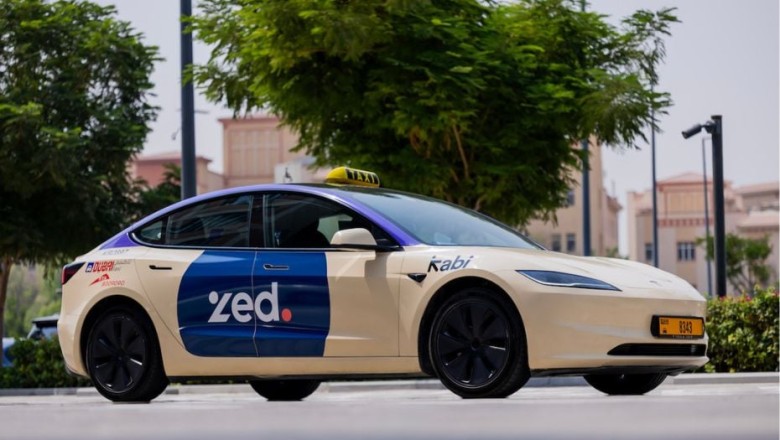
For Zed, which works closely with taxi operators, New Year’s Eve preparation starts several weeks before the event.
New Year’s Eve is one of the most demanding periods for urban mobility in Dubai, so preparation focuses on ensuring maximum operational readiness. Zed works closely with taxi operators to confirm that drivers expected to be active have fully functional accounts, working devices, and stable connectivity, with technical and compliance issues resolved in advance, said Abhinav Patwa, executive vice president at Al Ghurair Group and head of Zed.
Alongside technical readiness, Zed introduces targeted driver engagement initiatives designed to encourage availability during peak periods. These include structured peak-hour incentives and engagement programmes aimed at keeping more drivers active when customer demand reaches its highest levels.
Demand on New Year’s Eve is not evenly distributed across the city. Areas such as Downtown Dubai, Palm Jumeirah, and Dubai Marina experience intense surges, requiring dynamic driver allocation.
Demand during New Year’s Eve tends to concentrate around specific celebration zones. Zed manages this by dynamically responding to demand patterns across the city and encouraging a natural redistribution of drivers toward higher-activity areas, Patwa said.
By aligning driver earnings with demand intensity, the platform helps ensure adequate driver availability in high-volume zones, supporting smoother ride allocation without manual intervention.
While high-level planning begins weeks in advance, Zed says the most detailed operational decisions are made closer to the event itself.
From an external standpoint, Zed typically begins structured planning around three to four weeks ahead, including coordination with taxi partners, internal readiness checks, and high-level planning around driver availability and customer communication, Patwa said.
Operationally, the most detailed planning takes place during the final week, allowing teams to adapt to real-time inputs such as confirmed road closures, event schedules, and evolving demand patterns.
Road closures and diversions are set by regulatory authorities and can change rapidly on New Year’s Eve. While mobility platforms do not control these decisions, adaptability remains essential.
Routes, ETAs, and pickup points are recalibrated in real time to reflect changing access conditions, with clear in-app communication to help customers navigate alternative arrangements where required, Patwa said.
The focus, he added, remains on reducing uncertainty and maintaining a predictable customer experience despite external constraints.
According to Zed, one of the biggest challenges remains the imbalance between extreme demand and limited immediate availability, particularly during post-event dispersal after midnight.
Zed addresses this by offering customers greater flexibility through multiple ride options, including both taxi and premium limo services. Combined with proactive supply activation and transparent ETAs, this approach helps manage customer expectations while maintaining reliability during one of the busiest travel periods of the year.
Pricing dynamics are another critical factor during New Year’s Eve, when demand significantly outpaces supply. Bolt says its approach is designed to balance fairness for commuters with adequate compensation for drivers.
The pricing surge is managed through a manual cap placed on Bolt’s existing algorithm. This ensures that surge pricing remains fair and representative of the actual disparity between supply and demand, said Vasileios Chatziaslanis, general manager at Bolt. The approach ensures drivers are fairly compensated while navigating roadblocks and detours in busy areas.
Despite customer interest in ride reservations, Bolt does not offer pre-booking or ride reservation options during New Year’s Eve.
According to Chatziaslanis, the exceptionally high demand and uncertainty around supply availability and pickup point access, due to the dynamic nature of roadblocks, make advance reservations impractical during this period.
Bolt advises riders to plan ahead by booking at least 30 minutes prior to their intended departure time. This allows buffer time for unpredictable factors such as supply shortages or road closures that may delay vehicle arrival.
Riders are also encouraged to be mindful of their selected pickup locations and identify the nearest accessible pickup point for drivers. This approach helps ensure smoother pickups for both customers and drivers, Chatziaslanis said.
Driver support remains a key focus across platforms during New Year’s Eve. Bolt says it prioritizes fair compensation through surging fares and incentive structures that motivate drivers to remain active despite challenging conditions.
The goal, according to the company, is to recognise the effort required to manage pickups during one of the most demanding nights of the year.
Bolt is already planning improvements for future New Year’s Eve operations. The company plans to set up systemic configurations at high-demand locations in collaboration with the RTA and Dubai Police to make customer pickups easier.
Under this approach, the RTA would provide information on roadblocks and approved pickup locations, while Bolt would configure its technology to prompt users toward the nearest accessible pickup points. The aim is to create a smoother, more seamless pickup experience during future celebrations.
As Dubai’s New Year’s Eve celebrations continue to grow in scale and global appeal, mobility platforms say their role is becoming increasingly strategic. What was once a night defined by travel uncertainty is now being transformed into a carefully managed urban mobility operation, powered by data, coordination, and real-time adaptability.












Comments
0 comment