

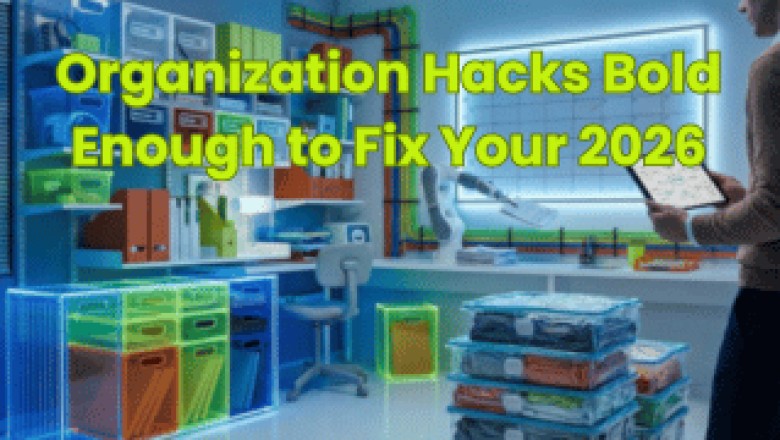

You want organization hacks that actually fix your 2026, not cute “tidy vibes” that quit by Tuesday. If you feel buried under too much stuff, you are not broken. You just need a smarter system, clearer zones, and less decision drama. Start thinking like a designer, not a shopper, because buying more bins rarely saves the day.
Here is the real tea: clutter taxes your brain. Visual scenes packed with objects compete for attention, so focus gets harder fast. Research on attention and visual competition supports that idea, which explains why messy counters feel loud. When your room looks busy, your mind can feel busy too, and you waste energy just scanning for what you need.
Also, clutter can raise stress for some people. A study linking “stressful home” ratings with daily cortisol patterns suggests home chaos can connect to chronic stress signals. So yes, your home matters. However, decluttering may solve many problems but not all, and life will never be perfect. That is fine. You want progress, not a magazine set.
That is why this guide gives organization tips you can actually keep. You will learn how to store things with purpose, cut paper clutter, and build routines that stick. You will also learn how to protect your time, because decision fatigue is real. Less deciding means more doing, and that is a game changer.
Finally, we will keep it practical for real homes and real families. You will create drop zones, use dead space, and build quick resets that take minutes. Plus, you will clean smarter, because regular cleaning removes dirt and germs before they spread. Bottom line: stay organized in 2026 with systems that work when you feel tired.
The Bold 2026 Mindset That Saves Your Space

First, accept this: most people do not have a storage space problem. They have much stuff and weak decisions. So, you keep buying bins, then you still drown. That is why this has to start with less stuff. Research on attention suggests visual clutter competes for your focus. That makes tasks feel harder and more stressful. So, when your room looks busy, your brain feels busy. Therefore, your first goal is simple: make your space calmer. Yale researchers also link visual clutter to changes in how information flows in the brain, which explains why “just ignore it” never works.
Next, choose function over fantasy. Stop organizing for an imaginary life. Keep the clothes you wear, not the outfits you hope you become. You can still love good ideas. Just make sure they fit your real life. When you store things, give every item one clear home, or it will wander back as random things. Decluttering may solve many problems but not all, and life will never be perfect. Being too minimalistic can lead to unrealistic expectations and may not solve all problems. Decluttering requires understanding your own personality and what methods work best for you. That is why some people thrive with quick resets, while others need a deep clean day.
Decluttering helps streamline physical and digital spaces. The inventory idea helps you recognize that clutter contributes to your mental load and to-do list. The ‘1% better' approach encourages small, incremental improvements in your organization efforts. Decision fatigue is real, so fewer daily choices keep you consistent. Also, a “stressful home” can connect with flatter cortisol patterns in daily life, so lowering clutter can be a legit stress move, not just a trend.
The Two-Bag Reset for Too Much Stuff

Grab two bags. One for donate. One for trash. Then walk one room and get rid of obvious junk. You will feel relief fast, and you will get excited. That first win is a game changer. Designating a donation center makes the decluttering process easier. Designate a donation center to make decluttering easier. Creating a donation center can simplify the decluttering process. Move in a clear process. Touch an item, then decide. Keep, donate, or throw. Do not create a “maybe” pile in the middle. The middle is where progress goes to die. Use the box method to sort items into keep, donate, and trash categories.
The grey zone donation method involves placing uncertain items in a box for a set time before deciding to donate them. The 20/20 rule allows you to let go of items that can be replaced for under $20 and in under 20 minutes. The 5-year question helps you decide whether to keep an item by asking if you'll be glad to have it in five years. Also, set a timer. A 20-minute sprint beats a five-hour meltdown. You will finish a small task, and that builds momentum. Later, you can repeat the same trick in other rooms. Set a timer for 15 minutes to declutter or clean. Setting a timer for 15 minutes can make cleaning and decluttering more manageable. The Pomodoro Technique promotes working in focused 25-minute bursts with 5-minute breaks.
READ ALSO: Greatest Adventure Plans That Will Make You Pack Fast
One Room Focus Beats Whole-House Chaos

Do not try to organize the entire house today. Instead, pick one room that impacts your daily life. The kitchen, bedroom, or entry usually wins. Then focus, because scattered effort creates scattered results. When you try to “fix everything,” you create too many choices. That drains your mental energy fast. Research links decision fatigue to weaker judgment and more impulsive choices. Assign a specific spot for every item to avoid clutter build-up. Designate a spot for junk to limit clutter accumulation.
Designating a spot for junk can help limit clutter in your home. Then add one rule that feels bold but realistic. Nothing lands on the floor “for now.” That rule forces quick decisions. It also keeps your space calmer. Organizing in little 15-minute bursts may not work for everyone; some prefer to dive in and spend a whole day on a project. So, pick your style and commit. Use a timer if you need a push. Also, plan your action like this: “If I finish dinner, then I clear the entry tray.” Research shows implementation intentions can improve follow-through. Start with what annoys you most. Maybe it is the floor by the bed.
Maybe it is the chair that holds clothes. Fixing one pain point reduces stress faster than a perfect label set. Home stress even links with daily mood and stress patterns in research, so the “one pain point” strategy makes sense. When you finish, take a photo. Post it if you want. That proof matters. It helps you remember you can create change, even with a busy schedule. Progress tracking also supports goal success in research, because it keeps your brain locked on wins.
Paper Clutter and the One-Touch Rule

Paper clutter looks small, but it grows fast. So, touch paper once, then decide. File it, scan it, or throw it away. Do not let it sit and multiply. This mindset protects focus, because extra visual input can raise cognitive load and strain working memory. And yes, paper loves to camp on your counters like it pays rent. Create a simple file system with boring names. Use “House,” “Money,” and “Kids.” Add “School” if you need it. Keep it easy, because complicated systems fail. Then, place folders where you actually use them. Put “Money” near where you pay bills. Put “Kids” near backpacks. This is how organization hacks stay alive.
Also, set one inbox tray for incoming papers. Then empty it weekly. This keeps the pile from becoming a permanent room feature. Your future self will call this helpful. If you need a stronger boundary, set a firm rule. Paper enters the tray only, not the kitchen island. Going completely paperless may not work for everyone; a hybrid approach can be more effective. Using a scanner can help reduce office clutter by digitizing important documents. Use a scanner to reduce office clutter by digitizing documents. When you scan, keep access simple and secure, because good digitization supports faster retrieval and shared access.
Maintain Inbox Zero by unsubscribing from junk mail and organizing emails into folders. Control email clutter by setting up filters and unsubscribing from spam. High email load can disrupt workflow and hurt well-being, so these steps are not just “nice to have.” Using magnetic desk organizers can help corral office supplies effectively. Finally, keep a small “action station” with a pen, shred pile, and scanner spot, so you finish the decision on the spot.
CHECK OUT THIS Epson Workforce ES-580W Wireless Color Duplex Desktop Document Scanner for PC and Mac here.
Visual Clutter and the Half-Clear Surface Rule

Visual clutter drains your attention, even when you deny it. So, set a rule for counters and tables. Keep at least half of each surface clear. That “half” limit protects your calm. Your brain has limited visual capacity, so extra objects compete for processing. Studies on visual competition and attention back this up. Also, when you walk into a messy room, you scan more. That steals time and energy. So yes, this is an organization hack with real impact, not a “clean girl” trend.
Use small bins or trays as boundaries. A tray says, “This is where keys live.” A bin says, “This is where remotes sit.” Otherwise, stuff spreads like it pays rent. Using a caddy or tray can transform a pile of clutter into something useful. Clear acrylic organizers may look great in photos but can be impractical if the items inside do not look good. Cheap Dollar Tree organizers may not be durable and can lead to spending more money in the long run. OXO containers are expensive and may not perform well for everyone. So, pick containers for function first. Choose what opens fast, cleans easily, and fits your actual routine.
Meanwhile, avoid stacking items “for later.” Later turns into never. Therefore, place items back right away when possible. That tiny habit keeps you clutter free. Better yet, set a daily two-minute reset after dinner. Then your surfaces stay honest. Research also links stressful homes with worse daily mood patterns, so the calm you create can feel very real. Aim for clutter boundaries, not perfection. That is how your 2026 stays fixed.
A To Do List That Runs Your Home

If your brain feels loud, your room will look loud. So, use one main to do list, and keep it boring on purpose. Too many lists create extra choices, and that triggers decision fatigue. Then you start avoiding tasks or picking the easiest option. Therefore, one list becomes one home base. It also keeps your organization hacks realistic, because you stop “planning” and start doing.
Next, make the list run your day, not ruin your mood. Write three priorities daily, then add one home small task. Keep it specific, like “clear the front door tray” or “reset the kitchen counter.” Also, use if–then planning to lock habits in place. Example: “If I finish coffee, then I review my list.” Research shows implementation intentions can improve follow-through, because you pre-decide the action. Meanwhile, try time blocking for the messy tasks that need focus. Time management research links better planning with improved performance and reduced stress.
Finally, sort tasks using the Eisenhower Matrix when your list feels packed. It helps you separate urgent from important, so you stop reacting all day. Review your list at the same time daily. After dinner, do a quick reset. Then, close the loop by moving unfinished tasks to tomorrow, not to your brain. That is how your 2026 stays organized, even when life gets loud.
READ ALSO: How to Change Your Tires and Impress Your Dad
Small Bins, Dead Space, and Built-In Storage That Saves Your 2026

Bins do not fix clutter by themselves. However, small bins fix categories when you use them well. Use them for batteries, chargers, and random things, because big bins hide big messes. Next, store things where you use them, because point-of-use storage reduces friction. Put scissors near gift wrap, cleaning spray near the bathroom, and craft supplies near your craft spot. Finally, label what matters, because labels help your family follow the system. Labels also reduce decision fatigue, so you stop guessing and start moving. Organize items using drawer dividers, document holders, and labeled bins to reduce visual noise.
Now, let’s talk dead space, because it is free real estate. Use it or waste it. Add hooks behind doors, a shelf above a doorway, and organizers inside cabinet doors. These tricks create extra storage space without crowding your room. Command strips may not work on all wall surfaces and are often misused. Command hooks can be used to keep pots and pans elevated and within easy reach. Using a hanging shoe organizer can store items other than shoes, like gloves and scarves. Using a hanging shoe organizer for items other than shoes can help with organization. Also, use under-bed storage for off-season clothes and blankets. If you keep ignoring dead space, clutter will sit on the floor, and the floor is not a storage plan.
If you can add built in storage, do it. A bench with hidden storage changes an entry, and ceiling-height shelves can transform a small space. Built-in options reduce loose piles and visual clutter, which matters because clutter can change how your brain processes what you see. Still, do not overfill it. Leave breathing room, because empty space gives you flexibility for real life, kids, and seasonal shifts.
CHECK OUT THIS Vtopmart 12 Pack Drawer Dividers here.
Front Door, Closet, and Bedroom Systems That Keep You Calm

The front door is where chaos enters, so create a drop zone. Add hooks for bags, a tray for keys, and a small bin for mail, then your day stops feeling like a scavenger hunt. Also, declutter your mudroom with built-in storage and hooks. Creating a ‘hallway hub' can keep halls clear by designating spots for clutter that belongs in other rooms. Next, create a simple command center for the family. Use a calendar, a list, and a folder, and keep it where everyone sees it. That way, you cut missed tasks and reduce arguments. Finally, make the rules clear. Shoes go here. Bags hang there. Mail goes in the tray. When systems feel obvious, your family can follow them without a long lecture.
Closets turn into a storage landfill fast, so start by reducing clothes you do not wear. If something does not fit, rid it, and if you keep it “just in case,” question that habit. Then use hanging tricks. Use hanging storage to maximize space in closets. Hang often-worn items at eye level, use slim hangers to save space, add hooks for belts and bags, and add shelf dividers to hold sweaters neatly. Also, use a simple “one in, one out” rule, because it stops duplicates and protects your money. Then lock in calm mornings with drawers that make sense.
A drawer without dividers becomes chaos, so divide by category. Socks, underwear, and accessories each need a section. Next, protect your bed area. Keep one surface clear near the bed, and use a small basket for chargers, lotion, or books. Your bedroom should feel like rest, not like storage. Also, keep the floor clean. If clothes land there, hang them or toss them fast, or the pile grows and adds stress.
CHECK OUT THIS Digital Calendar Wall here.
Kitchen, Bathroom, and Living Room Zones That Save Time

The kitchen needs zones, not perfection. Store tools near where you use them. Put cooking tools near the stove. Put prep tools near cutting boards. Next, set up pantry storage like a store shelf. Group snacks, breakfast, and canned goods. Use bins for packets. Use risers for cans. Spice jars that are all the same may look beautiful but may not function as well as expected. Rainbow organizing may look cool but can be impractical due to the variety of colors in food and products. Wire shelf risers may be too flimsy to hold heavy items as intended.
Bathrooms collect half-used bottles like a hobby. So, pick your favorites and let the rest go. Keep one backup per item. Store backups in a small bin under the sink. Decanting toiletries may lead to spills and extra containers that are not worth the effort. Next, build a laundry process that fits your life. Use hampers by person or by color. Keep stain spray near the hamper. Then start loads on a set day, when possible. Also, fold clothes quickly. If you let clean clothes sit, they turn into clutter.
Your living room needs easy resets. Give remotes a tray, give blankets a basket, give toys a bin. Otherwise, other things take over every surface. Using attractive baskets can help with quick living room decluttering. Create a clutter cabinet to store home accessories. Now, adopt the floor is lava rule. Nothing lives on the floor except furniture. Clutter can raise stress and cut focus, so quick resets protect your brain. Finally, do a five-minute reset daily. Set a timer, then put stuff back. This is a tiny task, but it saves weekends. It also helps you stay organized long-term.
CHECK OUT THIS Modern Bookshelf, Bookcase with 1 Door Storage Cabinet here.
Digital Organization, Account Safety, and Less Stress

Weekly Resets, Communities, and Habits That Stick

Kids, Family, and Small Space Survival Rules

Money, Free Space, and the “Paid For” Trap

The 2026 Promise: Stay Organized Without Becoming Boring

You do not need perfect. You need a system that works when you feel tired. So, choose less stuff, clear zones, and quick resets. Then you will stay organized with less effort. Also, keep in mind that clutter does more than “look bad.” Research links home clutter with lower well-being, so your reset protects your mood too. And since visual clutter competes for attention, simple spaces make focus feel easier.
Use these organization hacks like tools, not rules. Try the ones that fit your house. Keep what feels helpful. Drop what feels annoying. That is how you build a system you will actually use. Next, make your tired-day plan on purpose. Use an if-then script, like “If I walk in the door, then I hang the bag.” Research on implementation intentions shows if-then plans can improve follow-through. Then protect your time with one weekly block for resets. Put it on your calendar, like it matters, because it does.
And yes, you can do this. Your 2026 can feel lighter, calmer, and more in control. Now go fix one small space and enjoy the peace. Keep it realistic, though. Habits take time, and the timeline varies by person and behavior. So, aim for momentum, not a makeover. Pick one tiny win today, repeat it tomorrow, and let that stack into a year that actually feels organized.
UP NEXT: Car Accessories Everyone Lowkey Wants in 2026
The post Organization Hacks Bold Enough to Fix Your 2026 appeared first on Dumb Little Man.